

Table of Contents 📑
- Does student insurance in Europe cover dermatology treatments?
Short answer: Yes, but with terms and conditions. - Differences in dermatology coverage in European countries (country-by-country analysis)
- Germany — State insurance system
- Spain — Private insurance dominates
- France — EHIC and Mutuelle system
- When does insurance refuse to cover dermatology treatment?
- “Cosmetic” vs. “Medical” Treatment: It is important to understand the difference
- Pre-existing conditions: The hidden issue that can get a claim rejected
- How to go to a dermatologist (Step-by-Step)
- Common dermatology problems and insurance attitudes
- Preparation before the doctor (to avoid claim rejection)
- Conclusion — Should you take out additional insurance for dermatology?
- Frequently Asked Questions (FAQ)
- More information
If you’re dreaming of studying in Europe, you’ve probably thought about visas, university fees, and accommodation. But one thing that’s often overlooked is health issues — especially when it comes to dermatology.
The weather, water, and food in Europe are completely different from Pakistan. This change often causes problems like acne, allergies, or eczema on the face. Now the question is: will your student insurance cover it or will you have to pay thousands of euros out of pocket?
Today I’ll tell you what’s actually covered, what’s not, and what you should look out for before visiting a dermatologist.
Does student insurance in Europe cover dermatology treatments? 🤔
Short answer: Yes, but with terms and conditions. ✅
There is no single “student insurance” in Europe. Each country has its own system. In Germany it is divided into public (statutory) and private, in Spain it is a matter of private clinics, in France it is part of Social Security.
When it comes to dermatology, insurance companies pay close attention to two things:
- Is the treatment medically necessary?
- Is it cosmetic?
If your doctor can prove that acne or allergies are affecting your daily life (such as severe pain, infection, or psychological stress), most standard policies will cover the cost of the treatment. But if you are just going to get a skin whitening treatment or a scar removal, it is outside the scope of insurance.
Differences in dermatology coverage in European countries (country-by-country analysis)
The system in Europe is very different. Let’s take a look at some of the major countries that Pakistani students often visit.
Germany State insurance system
Students in Germany are legally required to have insurance. There are two options: Statutory Health Insurance (SHI) such as TK, AOK, or Private Insurance.
Statutory Insurance (e.g. TK, DAK):
You are usually covered if you are under 30 years old. The biggest advantage of this is that you can go directly to a dermatologist without a referral from a GP (general practitioner).
- What is covered? All medically necessary treatments, including acne medications, allergy tests, and minor surgeries (such as removing a mole if it is at risk of cancer).
- What do you have to pay? You only have to pay an additional cost (co-payment) of around 5 to 10 euros for prescription drugs. 10 euros per day for an overnight stay in hospital, up to a maximum of 280 euros.
Caution: If you have taken out cheap travel insurance (which is temporary for a visa), it does not cover “non-emergency” issues such as dermatology. You will need to bring full student health insurance to enroll in university.
Private Insurance (such as Provisit, Feather, Expacare):
These insurances are often for students who are over 30 or who need private facilities.
- Provisit Student: It covers dermatology, but there is an 8-month waiting period for certain dental and skin treatments. This means that if you take out a policy and go to a dermatologist in the first month, the insurance may refuse.
- Feather Italy/Europe: It only covers “emergencies” or new illnesses that develop after you buy the policy. If you have pre-existing acne, this will not be covered.
France EHIC and Mutuelle system
The French system is a bit complicated. European students use the EHIC (European Health Insurance Card), while non-European students have to register with the French Social Security (Sécurité Sociale).
- Basic coverage: This usually covers 70% of the doctor’s bill.
- Mutuelle: For the remaining 30% and the additional costs that basic insurance does not cover, you have to take out “Mutuelle” or top-up insurance.
Dermatology: In France, dermatologists are considered “specialists”. If you do not have Mutuelle, you can end up with a hefty bill. University medical centers usually have general practitioners, who will refer you to an outside dermatologist if necessary.
Spain Private insurance dominates
Spain has a public health system, but it is more common for students to take out private insurance, especially under visa conditions.
Sanitas, DKV, Adeslas:
Private insurance is common here. The Sanitas International Students policy is specifically for students. It covers dermatology and has no waiting period—you can see a dermatologist from day one.
Feature: Companies like DKV offer video consultations, where you can consult a dermatologist from home.
Co-payment: Some policies require you to pay between €3.50 and €23 per visit (e.g. €23 for DKV Integral Classic).
When does insurance refuse to cover dermatology treatment?
See, this is the critical point where most students get confused. I myself have read many cases on sites like dotzee.eu where students went to the dermatologist thinking that “insurance will cover everything”, only to be shocked when they received a bill of 200-300 euros after the treatment. The fact is that insurance companies do not look at every skin problem in the same way.
“Cosmetic” vs. “Medical” Treatment: It is important to understand the difference ⚖️
The basic principle of insurance is very simple: if the treatment is needed for “health” reasons, it will be covered, and if it is needed for “beauty” reasons, it will not.
These treatments are usually NOT covered:
If your goal is skin whitening, cosmetic laser treatment, permanent hair removal, or just anti-aging, the insurance company will clearly state that this is your personal choice, so the cost will be yours.
These treatments are usually covered:
If acne is causing a severe infection, you have a painful condition like eczema, psoriasis, or a mole is suspected of being cancerous, then it is a “medical necessity” and insurance will cover it.
Pre-existing conditions: The hidden issue that can get a claim rejected ⚠️
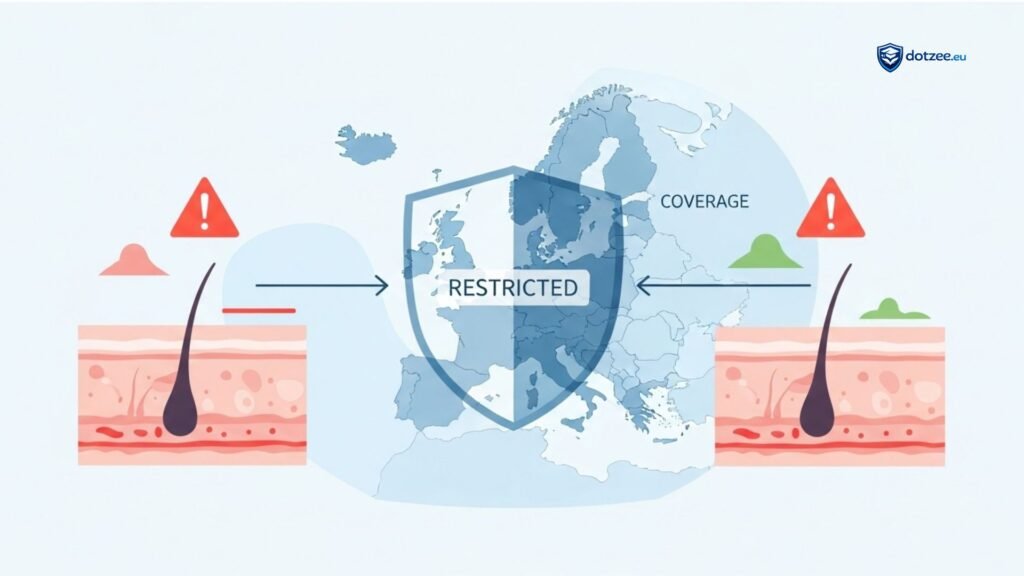
This is perhaps the most important and critical aspect. If you were already undergoing treatment for a chronic condition in Pakistan, and you did not mention it while filling the insurance form, then when you claim for the same condition after reaching Europe, the insurance company may reject it as a “pre-existing condition”.
- Private Insurance:
Private companies like Feather, Expacare clearly state in their policies that “pre-existing conditions are not covered”. This means that if you already have eczema or psoriasis, you will have to pay for its treatment yourself, unless your policy specifically states otherwise. - Statutory Insurance (especially in Germany):
This is where the German public insurance system (e.g. TK, AOK) stands out. If you are covered by this system, “pre-existing conditions” are also covered. This is a big reason why many students find German public insurance to be safer and more reliable, especially if they have any pre-existing medical conditions.
My advice: Always be honest about your medical history when filling out an insurance form, and if you have had any urgent treatment in the past, keep the documents. When in doubt, call your insurance company first to confirm whether the treatment you want will be covered. This small precaution can save you a lot of financial loss and mental stress.
How to go to a dermatologist (Step-by-Step) 🚶♂️
If you’re in Europe and have a skin problem, here’s how to avoid getting overcharged:
- Check your policy: First, check whether you have Statutory or Private. If it’s travel insurance, forget about the dermatologist—it only covers emergencies.
- Referral issues: Go directly in Germany. In Spain and France, you often need a referral from a GP. If you go without a referral, your insurance may cover the entire bill.
- Pre-authorization: If the treatment is expensive (like laser or biopsy), get written permission from your insurance company first. Many companies (like Provisit) want to be told first.
- Submitting the bill: If you paid out-of-pocket, keep the original invoice and doctor’s report. Scan it before sending it to your insurance.
Common dermatology problems and insurance attitudes 📊
Here are some common problems that students have to see how insurance reacts:
| Problem | Insurance attitudes | Conditions |
|---|---|---|
| Acne | Usually covered if severe. If minor, you may have to pay for the medication yourself. | Laser is only covered in case of inflammation. |
| Eczema / Dermatitis | Fully covered. Allergy tests are also covered. ✅ | — |
| Mole Removal | Covered if sent for biopsy (if suspicious). | If it is just for cosmetic reasons, it is not covered. ❌ |
| Hair Loss | Usually not covered. | If there is a thyroid or hormonal problem, it may be covered, but specific hair treatments (such as Minoxidil) have to be purchased yourself. |
| Allergy Tests | Covered if referred by a doctor. | Going to a lab and getting tested yourself is not covered. |
Preparation before the doctor (to avoid claim rejection) 🧾
I have seen that students often rush in and then the insurance company says “it was cosmetic”. To avoid this:
- Take a “Medical Necessity Letter” from your dermatologist. This letter should clearly state that not getting treatment is a risk to your health or is affecting your quality of life.
- Keep a medical history of Pakistan: If you already had this problem, keep old prescriptions or doctor’s notes. If the insurance company asks if it is a “new” problem or an “old” one, you can answer.
- Use the insurance app: Many companies (DKV, Sanitas) offer video consultations. This is cheaper and faster, and reduces the risk of a claim being rejected.
Conclusion — Should you take out additional insurance for dermatology? 🎯
Generally, if you are on Statutory Insurance (TK, AOK) in Germany, you are covered. If you have a standard student policy in Spain like Sanitas or DKV, dermatology is covered.
But if you have a very cheap travel insurance or a basic private plan (like Feather’s Basic Plan), I would strongly advise you to check with your insurance before going to a dermatologist.
As an insurance advisor, I believe that health issues can be the biggest problem of studying in Europe if you don’t choose the right policy.
Frequently Asked Questions (FAQ) ❓
Can I go to a dermatologist in Europe without a referral?
It depends on the country. In Germany you can go directly. In Spain and France, most private insurances require a referral from a general practitioner, otherwise the insurance may refuse to pay the bill.
Does insurance cover acne medication?
Yes, if the acne is medically severe and the dermatologist has written a prescription. However, insurance does not cover it if the medication is available over the counter (OTC). In Germany, you have to pay an additional 5-10 euros for prescription medication.
Are “pre-existing conditions” covered?
Private insurances generally do not cover pre-existing conditions. Germany’s public insurance (Statutory) covers them, provided you have given the correct information when applying.
Is laser treatment (e.g. for warts or acne scars) covered?
Most insurances only cover lasers if they are medically necessary (e.g. pre-existing cancer or recurring warts). Cosmetic lasers (spot removal) are never covered.
What should I do if the insurance company rejects my claim?
First read the rejection letter carefully. Most companies have an appeal procedure. Have your dermatologist write a detailed letter on “Medical Necessity” and resubmit it. If they don’t agree, contact the country’s Ombudsman or Consumer Protection.
More information 🔗
For better information on healthcare in Europe, you can read about “Healthcare in the EU“ on the official website of the European Commission. Also, if you are in Germany, there are detailed guides in English on the website of the Techniker Krankenhaus (TK) or the AOK.
Furthermore, for general information regarding dermatology, you can visit the “Dermatology” page on Wikipedia, but remember to always contact your insurance provider regarding insurance claims.
This article is for informational purposes only. Please consult your insurance advisor and doctor before making any medical decisions.
This article was written for dotzee.eu. We are committed to providing authentic information about insurance in dermatology . If you any questions, contact us.



Pingback: Student Visa Insurance: A Complete Guide for Moroccans While Studying in France
Yes, you are absolutely right. A student visa is required to stay in France for more than 3 months, and one of the most important documents for this is proof of health insurance. It shows that you can take care of your health in France and are covered in case of an emergency. So don’t forget to provide a health insurance document when applying for a visa, otherwise there is a risk of the application being rejected.
Pingback: Does student health insurance in Germany cover gym memberships or prevention courses?