📑 Table of Contents
- Studying in France: Basic Visa and Insurance Requirements
- The French health insurance system: How does it work?
- CVEC: costs you need to know
- Civil Liability Insurance (Responsabilité Civile)
- Admission to France: Practical tips regarding insurance
- Common reasons for visa refusal: Insurance-related
- Treatment in France without insurance: don’t take the risk
- European Health Insurance Card (EHIC): is it for Moroccan students?
- Insurance conditions for long stays
- Choosing an insurance company: Who to trust?
- Honest advice: How to get the most out of insurance?
- Frequently asked questions (FAQs)
- Conclusion: Insure your future
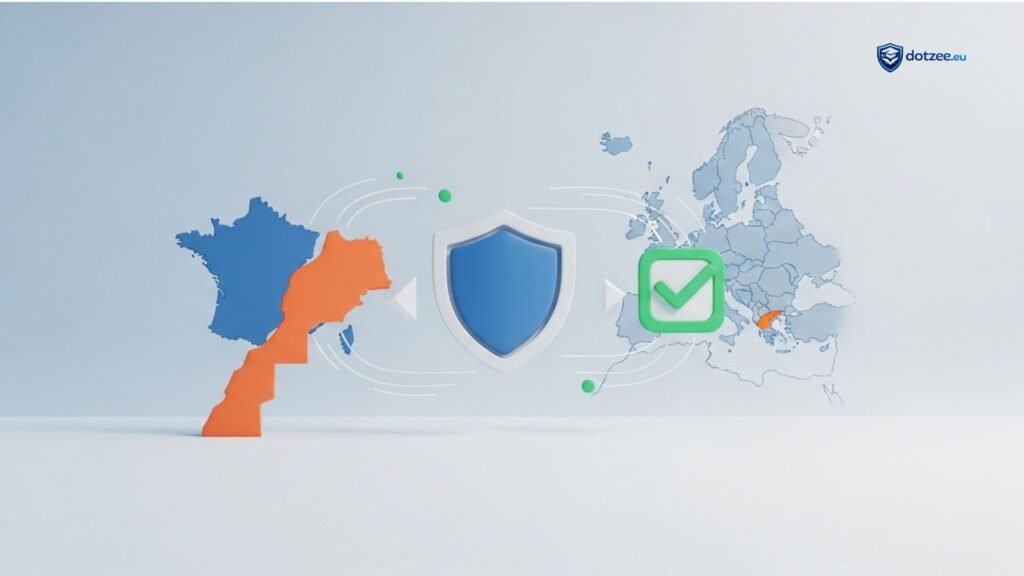
If you live in Morocco and are dreaming of pursuing higher education in France, congratulations! This decision is a major milestone in your life. France is a destination for thousands of international students every year due to its quality education system, cultural heritage and location in the heart of Europe. But the journey is not easy, especially when it comes to student visas and health insurance.
📌 Studying in France: Basic Visa and Insurance Requirements
A student visa (VLS-TS) is mandatory for Moroccan citizens to study in France. This visa allows you to stay in France for more than 3 months. During the visa application, one of the most important documents is proof of health insurance.
✅ Basic visa requirements for Moroccan students
When applying for a visa at the French embassy or consulate in Morocco, you must present the following documents:
- Passport (with at least 3 months of validity remaining)
- Proof of admission to a university (letter of enrollment or pre-registration certificate)
- Proof of financial resources (to cover expenses during your stay in France, which is approximately €738 per month in 2026)
- Proof of health insurance – this is where most students make mistakes. ⚠️
The French government has introduced new rules in 2026 that have made insurance requirements for student visas even stricter. Now, not just any insurance is enough, but it must meet the standards of the French government.
🏥 The French health insurance system: How does it work?
The French health insurance system is considered one of the best in the world. It consists of two parts:
1. Compulsory Health Insurance (Assurance Maladie Obligatoire)
This is the basic health insurance provided by the French government. In a major change in 2018, the separate social security system for students was abolished. All students are now covered by Protection Universelle Maladie (PUMA).
For Moroccan students, the registration process is online. You will need to go to the website etudiant-etranger.ameli.fr and enter your information. The documents required for this include:
- 📄 Copy of passport
- 📄 Proof of university admission
- 📄 Residence address in France
- 📄 Bank account details (RIB)
- 📄 Birth certificate (translated into French)
After registration, you will receive a temporary social security number, and later a permanent number and Carte Vitale card will be issued.
2. Complementary health insurance (Mutuelle)
Basic health insurance only covers 60 to 70 percent of your medical expenses. You have to pay the rest yourself. This is where mutuelle (complementary insurance) comes in. It is optional but extremely useful, especially if you suffer a major illness or accident.
📢 Related information: If you go to dotzee.eu, you will find a comparison of the different mutuelle companies in France and details of their plans.
💶 CVEC: costs you need to know
CVEC (Contribution Vie Étudiante et de Campus) is a compulsory contribution that all students (French and foreign) must pay. It is not insurance, but a fee used for student welfare projects.
- Amount: The amount of the CVEC in 2026 is €105.
- Payment method: Pay online on the CROUS website messervices.etudiant.gouv.fr.
- Important note: Proof of payment of the CVEC must be presented upon admission to the university.
Some students are exempt from the CVEC, such as refugees or students covered by international cooperation, but ordinary Moroccan students are required to pay this amount.
🛡️ Civil Liability Insurance
Public Liability Insurance is mandatory during your stay in France, especially if you are staying in private accommodation. This insurance covers damage caused to a third party by you.
For example, if a water pipe bursts in your room and damages the flat below, this insurance will pay for the damage. 💧
This insurance can usually be purchased from your bank or from a specific insurance company. Some universities also ask for this insurance at the time of admission.
✈️ Admission to France: Practical tips regarding insurance
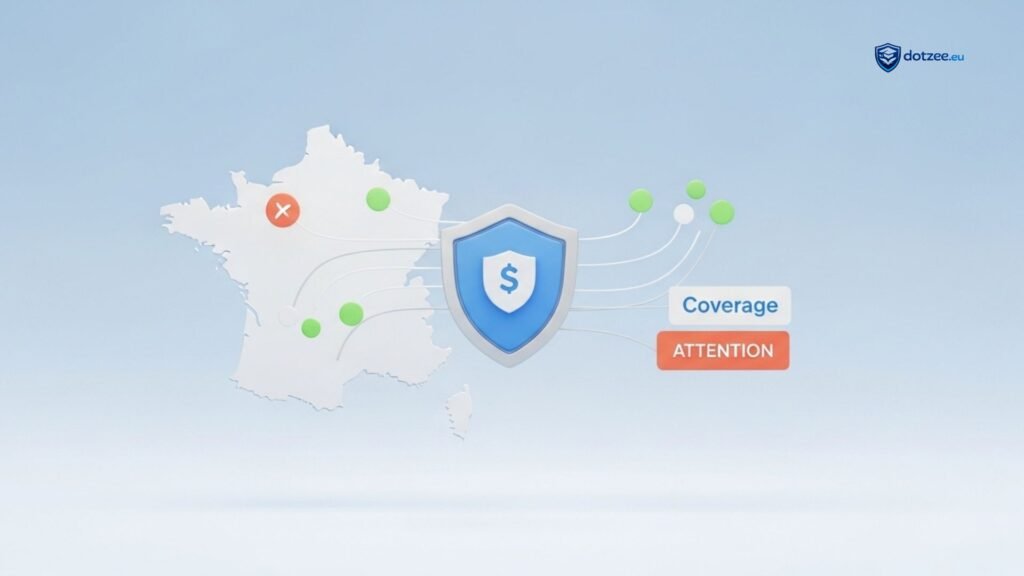
When you arrive in France, you will need to go through the following steps:
Step 1: Obtain a CVEC payment certificate
This is your first step. Without a CVEC certificate, you cannot enroll in university.
Step 2: Register on Ameli
As soon as you arrive in France, complete your registration on ameli.fr. If you did not do this during your visa application, do it now. For this, you will need a French address.
Step 3: Wait for the Carte Vitale
A few weeks after registration, you will receive the Carte Vitale (health card). This card must be shown when you go to the doctor.
Step 4: Choose a complementary insurance (Mutuelle)
You will need to choose a mutuelle according to your needs. Some popular student mutuelle are:
- LMDE
- SMEREP
Some banks also provide mutuelle for students.
❌ Common reasons for visa refusal: Insurance-related
Based on my experience, I have seen that there are some common reasons for visa refusal for Moroccan students:
1. Wrong type of insurance
Many students buy a general travel insurance from their home country and think that this is enough. However, French visa officers only accept insurance that is registered in France or meets EU standards.
According to the new rules of 2026, the minimum insurance coverage for a student visa must be €30,000, valid in all Schengen countries.
2. Ameli registration time
You must provide proof that you have registered at etudiant-etranger.ameli.fr at the time of your visa application. Students who do not do this on time may have their visa delayed or refused.
3. Failure to provide adequate proof of financial resources
Insurance costs are also part of your financial resources. The French government must be assured that you can cover not only your education costs but also your health costs. In 2026, the minimum financial resources threshold has been set at €738 per month.
💰 Treatment in France without insurance: don’t take the risk
The French health system is excellent for the public, but treatment can be expensive if you don’t have insurance. Below are the approximate costs of some common medical services:
| Service | Without insurance (€) | With insurance (€) |
|---|---|---|
| General doctor’s check-up | 25-30 | 0-5 (later reimbursement) |
| Specialist | 50-80 | 10-20 |
| One night in hospital | 1,500-3,000 | 0-300 |
| Emergency room | 100-200 | 0-30 |
These figures show how important a good insurance policy is. At dotzee.eu we have compared the best insurance policies for students in France.
European Health Insurance Card (EHIC): is it for Moroccan students?
The European Health Insurance Card (EHIC) is only for citizens of the European Union, the European Economic Area (EEA) and Switzerland.
Morocco is not part of the European Union, so Moroccan students are not eligible for the EHIC. You will need to obtain compulsory health insurance in France through Ameli.
📅 Insurance conditions for long stays
If you are staying in France for more than 3 months, you will need a long-stay visa (VLS-TS). The insurance conditions for this are as follows:
- Compulsory health insurance: Registration through Ameli is mandatory.
- Supplementary insurance: Optional but recommended.
- Liability insurance: Mandatory for private accommodation.
- Coverage limit: Minimum between €30,000 and €50,000.
🏢 Choosing an insurance company: Who to trust?

There is no shortage of insurance companies in France, but not every company will meet your needs. Some of the most popular and reliable companies are:
- LMDE: Especially for students, with branches throughout France.
- SMEREP: Especially for students, especially in and around Paris.
- HEYME: Digital platform, popular with young students.
- Allianz: International company, various plans.
💡 Honest advice: How to get the most out of insurance?
Based on my years of experience, I would like to give you some advice:
- Plan in advance: Start preparing for insurance at least 2 months before the visa application.
- Have your documents complete: Have all the documents ready for Ameli registration (including a French translation of your birth certificate).
- Create an account: Check it regularly after creating your Ameli account.
- Contact your local CPAM: If you have any problems, contact the CPAM (Caisse Primaire d’Assurance Maladie) in your city.
- Choose a médecin traitant: Choose a médecin traitant (primary doctor) before going to the doctor in France. This leads to higher reimbursement.
❓ Frequently asked questions (FAQs)
Can I travel to France from Morocco with travel insurance?
No, only insurance that is registered in France or meets EU standards is accepted for a French visa. Travel insurance is only sufficient for short stays (less than 3 months).
When will I receive the Carte Vitale after registering on Ameli?
The Carte Vitale is usually sent to your address 2 to 4 weeks after registration. In the meantime, you can use the provisional certificate.
Is CVEC insurance?
No, CVEC (€105) is a compulsory contribution used for student welfare. It is not insurance and does not cover medical expenses.
Can I see a doctor in France if I do not have insurance?
Yes, you can see a doctor but you will have to pay the full cost yourself. A simple doctor’s check-up can cost between €25 and €30. This amount is reimbursed with insurance.
What is the minimum insurance coverage in France?
A minimum coverage of €30,000 is required for a student visa. This limit can be up to €50,000 for long-stay visas.
Can I get a visa if I do not have insurance?
No, proof of health insurance is mandatory for the visa application. Without insurance, the visa application will be rejected.
🎯 Conclusion: Insure your future
Studying in France is a great opportunity, but preparation is essential. Health insurance is not only a formality for a visa, but it is also your responsibility. Even a minor illness can cause a major financial crisis without insurance.
Remember, a good insurance policy is one that understands your needs and does not burden your pocket. In a country like France, where the healthcare system is considered one of the best in the world, having adequate insurance will give you peace of mind.
If you have further questions or would like to know about a specific insurance policy, please contact us at dotzee.eu. We are here to help you.
Pingback: Does student health insurance in Germany cover gym memberships or prevention courses?
Pingback: Student Visa Insurance for Students from Russia: A Complete Guide