
For students from Russia studying abroad, student visa insurance is not just a formal paper requirement, but a practical safety net that reduces financial, medical and legal stress in difficult times. While working in the insurance field, I have repeatedly seen that many students and their parents pay a lot of attention to visas, university admissions and accommodation, but postpone insurance until the last minute. The result is that either the policy is purchased incorrectly, or it does not meet the requirements of the embassy, or the coverage is so weak that it does not come in handy when it is actually needed. ❌
📌 What is student visa insurance and why is it important for Russian students?
Student visa insurance is actually an insurance policy designed for students studying abroad to protect them from risks such as medical expenses, emergencies, hospitalization, accidents, and in some cases, repatriation during their stay in the host country. 🏥
This requirement becomes even more important for Russian students for two reasons:
✅ Visa requirement
Most countries, especially those in the Schengen zone, consider insurance mandatory for student visas. If your policy does not meet the required standards, your visa application may be delayed, additional documents may be requested, or even rejected.
✅ Financial protection
Treatment in Europe or other developed countries can be very expensive. A simple emergency room visit, X-ray, doctor consultation, or even a few days of hospitalization can cost thousands of euros. Students are usually on a limited budget, so a medical incident without insurance can disrupt their entire financial planning.
🌍 In which countries should students from Russia pay particular attention to insurance?
Although insurance is important in almost every study destination, some countries have more explicit and stricter rules.
Germany
Student insurance in Germany is not only a matter of visas, but also of accommodation, university enrollment, and residency permits. It is very important to understand the difference between public health insurance and private student insurance there. Making the wrong choice can lead to legal and administrative problems later.
Italy
Many Russian students in Italy come under short-stay and long-stay student visas. Here, travel insurance and later local health registration requirements may be different. Many students make the mistake of buying a policy for the visa, but it proves insufficient for the residency process once they arrive in Italy.
France
Some students in France have to register in the local system, but a proper insurance policy is still important during the initial visa phase. There should be gap-free cover, especially for the first few months.
Spain
The requirement of consulate-approved or comprehensive medical insurance is taken very seriously in Spain. Here, low-value travel insurance is not sufficient in every case, especially for a long-term student visa.
Netherlands, Belgium, Poland, Hungary, Czech Republic
In these countries, the validity of the policy, coverage amount, hospitalization cover, and sometimes local compliance are also important. The requirements of each country’s embassy or immigration authority may be different, so the “one-size-fits-all” approach often backfires.
🛡️ What should be covered in student visa insurance for Russian students?
This is the part where most people only look at the premium, while the real question is coverage. A cheap policy can end up costing you dearly later.
- Emergency medical expenses – This is the basic coverage. It usually includes sudden illness, accident, doctor consultation, diagnostic tests, and urgent treatment.
- Hospitalization – If a student needs hospitalization, the cost of room charges, surgery, nursing care, and emergency treatment can be very high. Therefore, inpatient cover should be strong.
- Repatriation or medical evacuation – If the health condition is such that the student has to be sent back to his/her country, or a special medical transfer is required, then this coverage becomes extremely important.
- Accidental death or permanent disability – This is not necessary in every policy, but the better student plans have this benefit. Especially for parents who take risk management seriously.
- Outpatient cover – Many affordable policies only cover major emergencies, but may be limited to everyday needs such as GP consultations, medicines, or minor treatment. This coverage becomes really important if the student is going away for a long period of time.
- Mental health support – This section is still often overlooked, but students living abroad can face anxiety, adjustment issues, depression, and stress. Not every plan offers this coverage, but it should be seriously considered where possible.
✈️ Is travel insurance enough or should you take out separate student insurance?
The truth is that the answer is not the same in every situation.
🧳 Short-term courses (3 to 6 months)
If you are only going to a language course or exchange program for 3 to 6 months, a good travel medical insurance may be enough in some countries — provided that it meets all the embassy requirements.
For such a short period of time, this option can be reasonable and economical.
🎓 Long-term degree programs (Bachelor’s, Master’s, PhD)
But if you are enrolling in a long degree program such as a Bachelor’s, Master’s or PhD, then it is better to take out a specific student health insurance or a country-compliant plan.
Why? Because emergency medical cover alone is not enough during a long stay. Aspects such as:
- Integration into the local healthcare system
- University registration requirements
- Residency laws
…also become important.
💡 My practical advice
Russian students should not buy insurance with the mindset of “getting it for the visa” alone.
If you’re going abroad for a year or two or more, the validity of the policy should go beyond the visa requirement.
Ask yourself:
- Does it really cover you for extended stays?
- Does it cover local medical treatment?
- Does it cover unforeseen circumstances?
Make this decision thoughtfully — because your health, and your future, are worth more than a visa application.
❌ Common Mistakes When Buying Student Visa Insurance for Russian Students
I have repeatedly noted a few mistakes while looking at insurance-related questions and cases, and these mistakes become problems later. ⚠️
- Buying only the cheapest policy – This is probably the most common mistake. Students think that the embassy only wants an insurance certificate, but if the certificate is obtained but the actual coverage is weak, then there is a problem later when claiming.
- Hiding pre-existing conditions – If a student has a pre-existing medical condition, such as asthma, diabetes, anxiety disorder or any chronic condition, not declaring it can be very dangerous. The claim can be rejected.
- Getting the policy duration wrong – Many students take a policy according to their academic dates, but do not include travel days, arrival gap, residency process, or course extension. The result: a coverage gap is created. ⏳
- Not reading deductibles and exclusions – Excess, deductibles, exclusions, waiting periods and claim conditions are very important in a policy. These are the things hidden behind a cheap premium.
- Ignoring embassy-approved format – Sometimes the policy is technically good, but the document format or wording does not match the required standards of the embassy. Then the applicant has to get it reissued.
✅ How to choose the best student visa insurance for Russian students?
Now the question is, how to identify a good plan? In my opinion, just the brand name or premium is not enough, but it is important to look at the points given below. 👇
- What is the coverage limit? – If you are going to Schengen or a European country, the coverage limit should be enough to comfortably cover major risks like emergency hospitalization and repatriation.
- Is there a cashless network or not? – If cashless treatment is possible in a hospital, the immediate financial pressure on the student is reduced.
- 24/7 assistance service – An emergency abroad doesn’t happen overnight. Multilingual support and a 24/7 helpline are essential—especially for students who are moving away from home for the first time. 📞
- How easy is the claim process? – If there is too much paperwork, vague rules, or a slow turnaround for a claim, the practical value is reduced.
- Position of chronic illness or follow-up treatment – If the student has a pre-existing condition, pay special attention to the policy wording.
- Additional benefits such as maternity, dental, optical – These are not mandatory for every student, but can be useful in some long-term plans.
Special advice for Russian students going to Germany
Germany has been a major destination for Russian students, so it is worth discussing it separately. In Germany, it is not enough to simply show insurance for a visa. Many students there have to choose between public statutory health insurance and private incoming/student plans.
- When can a private plan be useful? – Private incoming insurance can be useful initially when applying for a visa or during the initial arrival period, especially if local enrollment has not yet been completed.
- When is public insurance better? – If the student is regularly enrolled in a degree program and meets the age/eligibility criteria, public health insurance is often more sustainable.
Important point for parents: Insurance is not just for the student, but also for your peace of mind 🧠
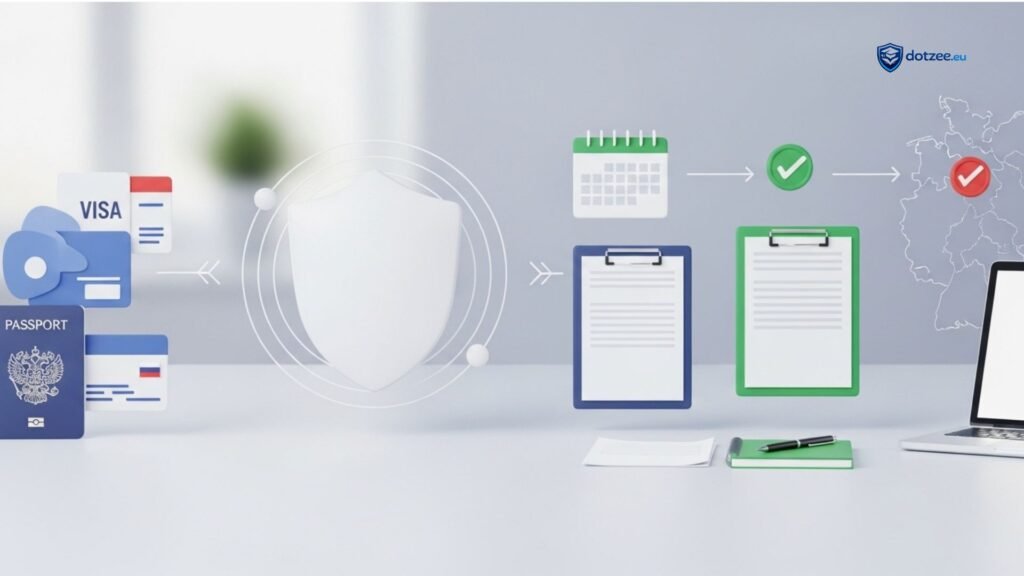
Pakistan, Russia, India, Bangladesh — In our social values, when parents send their children to study abroad, the biggest fear in their minds is:
- “What if my child suddenly falls ill?”
- “What if there is an accident?”
- “Who will help him in an emergency at night?”
A good student visa insurance is not just a financial product, but a family risk management tool.
The most important thing for parents is to know:
🔹 In which language is the helpline available? Will it be possible to speak in Urdu, Russian or the local language?
🔹 Who will file the claim? Will the student be able to do it themselves or will the company team help?
🔹 Which number to dial in case of an emergency? Is it active 24/7?
🔹 How long does it take for the refund (money back)? Is the process transparent and fast?
🔹 Will the student have to pay out of pocket at the hospital, or will the insurance company pay the bill directly?
💡 Why these questions matter
These are practical questions that may seem small in a brochure, but they are the ones that prove decisive in real life.
Parents should definitely clarify these points before purchasing an insurance policy — because when your child is thousands of miles away, your peace of mind is in knowing:
“If anything happens, we are not alone.
📘 Real-life examples: Where insurance made a difference
🔴 Example 1: Cheap policy, expensive outcome
A student bought the lowest-premium travel insurance for Europe. He got a visa, but he had to be hospitalized for emergency treatment due to severe abdominal pain. The policy had very low outpatient-to-inpatient transition and certain diagnostic limits. The reimbursement was partial and he had to cover the rest of the costs himself. If he had taken a slightly better comprehensive plan, he could have saved thousands of euros.
🔴 Example 2: Duration miscalculation
A Russian student took out insurance only until the semester start date, but he arrived a week early and the residency process was extended by a month. In the meantime, a coverage gap arose. This type of mistake may seem small, but it becomes the biggest problem at the time of claim.
✅ Step-by-step checklist before buying student visa insurance
I am writing this practical checklist especially for students who are going to apply soon. 📋
- Check the official website of the embassy or consulate – Each country’s rules may be different. First, check the official requirements.
- Check the university’s enrollment requirements separately – Sometimes one thing is enough for a visa, but another for a university.
- Add buffer days to the duration – Departure, arrival, orientation, residence permit delay—include all.
- Verify the wording of the coverage document – The country coverage, dates, insured name, policy number, medical cover, and repatriation should be clearly written on the certificate.
- Be sure to read the exclusions – Know the position of sports, mental health, chronic illness, dental emergencies, pregnancy, etc.
- Ask for a sample copy of the claim process – If the insurer or broker is not providing clear claim guidance, be cautious.
- Test the emergency helpline – If possible, contact customer support once and see the response.
- Keep both PDF and printed copy – Both soft copy and hard copy are useful while traveling.
📈 Latest Trends: What are the changes in the Russian student insurance market?
Nowadays, the system of student mobility, visa checks, and cross-border insurance verification is more organized than ever before.
If you are thinking of studying abroad from Russia, these trends in the insurance market are very important for you:
📋 Greater emphasis on document compatibility
It is no longer enough to simply have an insurance policy. The format of the documents, the language of coverage, and compliance with the visa conditions have become much more important.
Embassies or consulates now pay close attention to every detail.
📱 Digital claims and app-based support
Most insurance companies these days are offering features like claim submission, e-cards, and telemedicine via mobile apps.
These features can be really useful for students — especially when you are alone in a new country.
🧠 Focus on mental health and preventive care
Although not every insurance provider offers this facility, long-term student plans are now including mental health coverage and preventive treatment.
This trend is expected to strengthen in the future.
⚠️ Tighter scrutiny of cheap cross-border policies
Many low-cost insurance policies are now under investigation — especially those that do not comply with local laws or healthcare systems.
The “cheaper is better” formula no longer works in insurance.
🔍 An important note: Immigration laws change over time
That is why I always recommend checking the latest information on the official immigration or consular website of the relevant country before making a final decision.
For example, the European Union’s immigration portal helps students understand residency and legal requirements:
European Commission Immigration Portal
💡 Summary
When choosing insurance, don’t just look at price or visa approval — make sure your policy is truly suitable for:
- Long stays
- Local needs
- Unforeseen circumstances
Because when your child is studying abroad, your peace of mind is everything.
📞 What to do if you have to make a claim?
This part is very important, because most students buy a policy but do not know how to claim.
✅ Take these steps immediately
- Contact the insurer’s emergency helpline immediately
- Keep the policy number and personal details ready
- Save hospital reports, bills, prescriptions
- Make sure to get a discharge summary
- If pre-approval is necessary, inform the insurer before treatment
- Submit the claim form on time
- Keep a record of emails and communications
❌ Common mistakes
Many students get treatment first, later do not take receipts properly, and do not notify the insurer on time. Then the claim becomes weak. Claim management is also a part of insurance literacy, and more attention should be paid to it.
🔄 Can Russian students have to change their insurance after arrival?

Yes, it is very possible.
When?
- If a temporary incoming policy has been taken for a visa
- If local law mandates public insurance
- If specific recognized cover is required for university enrollment
- If the initial policy is only for the travel phase
That is why it is better to clarify before leaving Russia:
- Will the current policy still be valid after arrival?
- Will it have to be upgraded or replaced?
- If yes, when and how?
This clarity saves later trouble. ✅
💭 My opinion: Russian students should think beyond the “minimum required”
I personally believe that students from Russia going abroad to study should not stop at just minimum visa compliance in insurance. The reason is simple: a visa is a step, life begins after it. The real question is not “will the embassy accept it or not”, but rather “will this policy work for me if I really have a health issue?”
A practical and balanced approach could be:
- Consider visa requirements as a baseline
- Then increase the cover according to the actual student life risks
- If it is a long-term program, be sure to check local compatibility
- Don’t ignore aspects like mental health, outpatient, emergency evacuation
- Look for value-for-protection instead of the cheapest option
This is the difference between paper insurance and real protection.
🎯 Conclusion
Student visa insurance for students from Russia is a serious, practical and sometimes decisive topic. It is not just an annex to your visa file, but something that is closely linked to your financial security, medical access, and peace of mind abroad.
Whether you are going to Germany, Italy, Spain, France, or any other country, a proper insurance policy can significantly protect you from unexpected expenses, claim disputes, and legal complications.
My sincere advice is not to make a decision based on haste, price alone, or “this is what you get” thinking. Check the official requirements, read the policy wording, get the duration right, and if necessary, get expert-level guidance. My goal at dotzee.eu is to explain insurance in a simple, actionable, and realistic way so that people don’t just buy a policy, but the right policy.
❓ Frequently Asked Questions (FAQ)
Is student visa insurance mandatory for students from Russia?
In most countries yes, especially in Europe it is an important or mandatory visa requirement.
Is travel insurance alone enough?
For a short-term course, it may be sufficient, but for a long-term degree program, a dedicated student insurance or local compliant plan is better.
What should a student visa insurance cover at least?
Emergency medical expenses, hospitalization, and repatriation should be the basic coverage.
Which insurance is best for Russian students in Germany?
It depends on the program, age, and enrollment status. In some situations, public health insurance is better, while a temporary private incoming plan can also be useful in the beginning.
What is the most important thing at the time of a claim?
Prompt notification, complete medical documents, original bills, and timely submission as per policy rules.
Does student visa insurance also provide mental health cover?
Some plans do, some do not. It is important to check this benefit in the policy wording.
How to choose the best student visa insurance?
Decide by looking at official embassy requirements, adequate coverage, clear claim process, strong wording, and country-specific suitability.
Disclaimer: This article is for informational purposes only and does not constitute legal or insurance advice. Always verify requirements.