
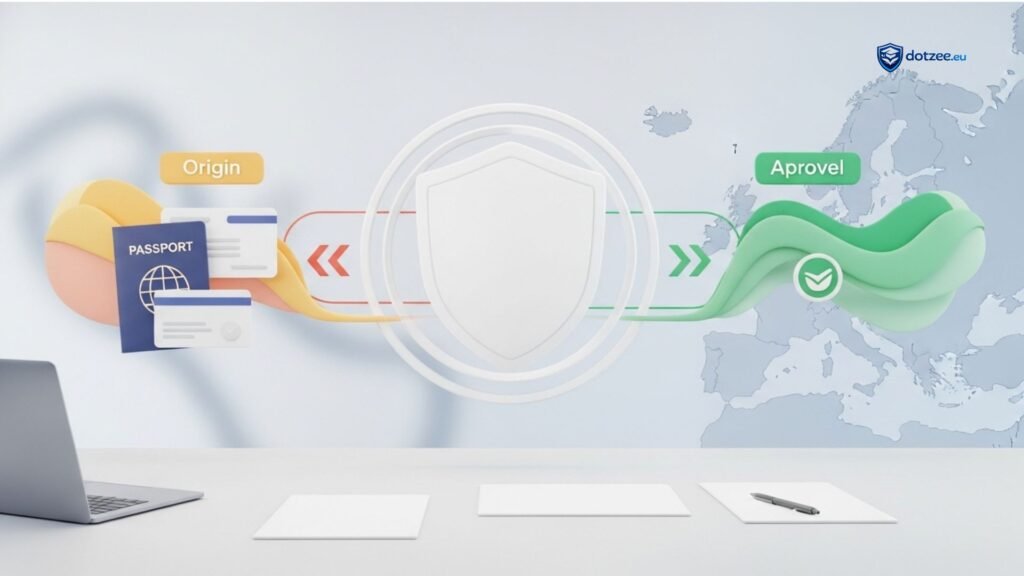

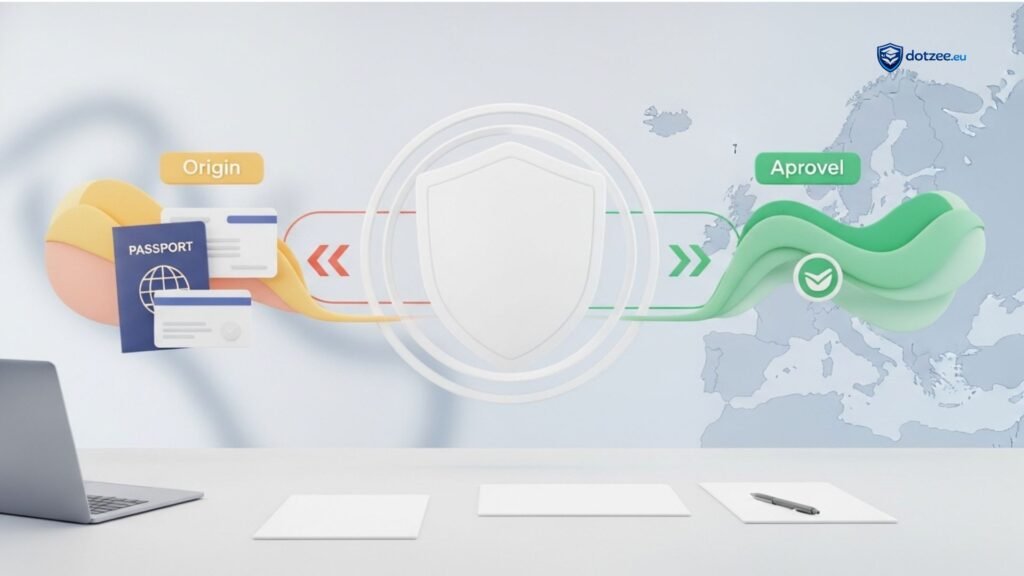
Studying in Europe is the dream of many Nigerian students. Better universities, world-class degrees, international exposure, and strong future career prospects — all these make Europe an attractive destination.
But it is also a fact that the student visa of Europe is not only obtained by admission letter or financial proof. In many European countries, student visa insurance or health insurance for international students is a basic requirement, and this is where students and their parents often get confused.
After continuously working in the insurance niche and looking closely at the visa insurance requirements of different countries, I can say with full confidence that many students suffer from delay, rejection or unnecessary extra cost only because they consider the insurance as a last minute formal document.
The fact is that the right insurance policy not only fulfills the visa requirement, but also significantly reduces your financial risk while abroad.
At dotzee.eu I try to explain similar insurance topics in a practical way, especially for readers who want straightforward, actionable and factual information.
This article will not be just a basic overview. I will also add practical insight that is usually not found in insurance comparison pages or generic blogs. 🧠
❓ Why is student visa insurance in Europe so important for Nigerian students?
If you are traveling from Nigeria to Europe to study, you take out insurance for two separate but related purposes:
- To fulfill the visa requirement
- To financially manage your medical and emergency risk
It is important to understand this difference.
Many students think that “if the visa is applied, then the work of insurance is over”. It is not so. In most countries, the embassy not only looks at the document, but also looks at whether the policy is really usable, valid, and in accordance with the rules of the destination country.
For example, people sometimes mistake travel insurance and long-stay student health insurance for the same thing, even though the two may be used differently.
In the case of Nigerian students, this issue becomes even more important because:
- Visa scrutiny is sometimes more detailed
- Consistency is observed in the documentation
- Financial sustainability is an important concern for the embassy
- In some countries it is mandatory to maintain proof of insurance even after arrival
If you only took the cheapest policy, but it did not meet the standards of the embassy or university or residence permit office, then you may have to buy the policy again. That is, a wrong decision becomes a double expense.
📌 What exactly is student visa insurance?
In simple terms, student visa insurance is an insurance cover that covers medical expenses and emergency risks in certain situations for international students studying in Europe, as well as fulfills the requirements of the visa or residence permit process.
But here is an important point:
Insurance does not mean the same in every country. 🌍
In some countries, travel medical insurance may be sufficient for an initial entry visa, but upon arrival you may have to go to the local student health insurance or public health insurance system. On the other hand, some countries require comprehensive cover from the start.
That is why the “one-size-fits-all” approach fails here. ❌
🛡️ Getting insurance is an important and mandatory part of the visa process for Nigerian students studying in Europe.
Four types of insurance are usually mentioned:
First is travel medical insurance 🚗, which is usually taken out when applying for a visa or during the initial trip and covers emergency medical treatment, hospital admission, and in some policies repatriation — useful for a short period of time, but not enough for a long stay in Europe.
Another important type is student health insurance 🏥, which is more suitable for longer academic stays; Some European countries offer special student plans for international students that cover basic treatment, doctor visits, hospitalization, diagnostic tests and sometimes medication.
A third option is public health insurance 🏛️, like in Germany or France, where you can become part of the public health system if you meet the eligibility criteria — this is a more organized, reliable and legally sound option, but not immediately available to all students.
A fourth type is private health insurance 🔒, which may be suitable for students who cannot immediately join the public system, or whose age, language course status, pre-arrival stage, or visa type make private coverage more appropriate.
But remember that most mistakes happen when buying private insurance – the policy is cheap, but often does not meet the requirements of the embassy or local authority, so be sure to check that your policy complies with visa and local laws before buying. ⚠️
🌐 Why are insurance requirements different for Nigerian students in different European countries?
This question is searched a lot, and rightly so.
Europe is not a single country but a collection of countries with different legal systems, immigration rules, and healthcare structures. Therefore, Italy student visa insurance, Germany student health insurance, France insurance for Nigerian students, Spain student visa medical cover, and Netherlands international student insurance may differ from each other.
For example:
- The insurance structure in Germany is quite formal and regulated 🇩🇪
- In France, the student health access system is different 🇫🇷
- In Italy, separate practical requirements may come up in visa stage and permit stage 🇮🇹
- In Spain, the no co-payment and full-coverage nature becomes important in some cases 🇪🇸
- In the Netherlands it has to be seen that you are only studying or will also work part-time 🇳🇱
So the main rule when applying from Nigeria should be:
“Insurance should always be chosen based on destination country, visa type, and length of stay — not just on price.”
⚠️ The most common mistake: Mistaking travel insurance and health insurance for one
This mistake is very common among Nigerian students, and the same pattern is seen in South Asia.
Many people take “visa insurance” from WhatsApp agent or random online seller. The document is received, the premium is reduced, and they feel the job is done. Later it turns out:
- The embassy did not accept the document ❌
- Additional insurance was requested at the time of university enrollment
- A new policy had to be taken for residence permit
- At the time of claim, the policy turned out to be practically useless
Remember:
Not every visa insurance has long-term student medical insurance
and
Not every cheap travel policy is sufficient for legal residence 🧾
That’s why it’s important to read the policy wording, check the credibility of the insurer, and verify the official country-specific requirements.
Student visa insurance in Germany for Nigerian students

Germany is one of the most popular study destinations for Nigerian students. The tuition structure can be relatively affordable, the universities are strong, and the long-term prospects are good. But in terms of insurance, Germany is quite a structured country.
What is important to understand in general in Germany?
Broadly two concepts are important for student insurance in Germany:
- Private health insurance
- Public health insurance
If you are a degree student and meet the age/eligibility criteria, public student health insurance is often a strong option. But in the initial visa application stage from Nigeria, some students first take private incoming insurance or temporary cover, then join the public system after arrival.
Practical advice 💡
If you are going to Germany, don’t just look for “certificate made for embassy”. See also:
- Which system will you go to after arrival?
- Which insurance proof is required for university enrollment?
- Acceptance letter from public insurer is required or not
- Rules for language course and degree course are not different
Not understanding this detail creates a lot of confusion.
Student visa insurance for Nigerian students in Italy
Italy is also an attractive destination for Nigerian students, especially for arts, design, medicine-related studies, business and social sciences.
In the case of Italy, most students take an insurance at the visa stage, but later new complexities come up in the local registration or permit process.
Important points for Italy 📌
- Insurance dates are correct
- Cover should be relevant from visa application period to actual arrival
- Emergency medical expenses are clearly covered
- If the embassy wants any minimum wording or format then it should be followed
“Documentation clarity” is more important than “lowest premium” when taking a policy for Italy, because document presentation matters in consular scrutiny.
Practical angle of health insurance for Nigerian students in France
The system for international students in France is relatively organized, but confusion still occurs, especially in the pre-departure and post-arrival stages.
Some students think that once admitted, everything becomes automatic. The fact is that you have to understand that:
- What to show for initial visa stage?
- How will the local student health registration be done after arrival?
- Is taking supplementary insurance beneficial or not?
In France, despite basic state-linked student health access, supplementary cover may have practical benefits, as some expenses are not fully reimbursed.
Student visa medical insurance in Spain: what to pay special attention to?
Spain’s student visa insurance topic is particularly sensitive, as in some cases the authorities want comprehensive private health insurance, with limited exclusions and an acceptable co-payment structure.
Important points for Spain ✅
- Policy duration should be as per visa period
- The insurer should be reputable
- Better comprehensive outpatient + inpatient cover
- Avoid high deductibles or complex reimbursement models
- The wording should be clear that the insurance is valid in Spain
Many students only take the generic Schengen travel plan, which is not sufficient for a long-stay student visa.
What should be the strategy for the Netherlands, Poland, Hungary and other European countries?
If you’re traveling to the Netherlands, Poland, Hungary, Finland, Ireland, Portugal, Belgium or Austria, don’t assume a friend’s policy will apply to you.
You should verify these 5 things individually:
- Embassy/consulate requirement
- University admission guidance
- Residence permit insurance condition
- Stay duration
- Insurance status according to work rights
Especially in the Netherlands, if the student does a part-time job, the insurance obligations may change. This is a classic example of why insurance should not be considered a static document.
📋 Document checklist for Nigerian students: What to prepare before buying insurance?
This step is often skipped by people, although it makes policy selection easier.
Required Information:
- Full name as per passport
- Date of birth
- Destination country
- University/college name
- Course start date
- Expected travel date
- Visa category
- Length of stay
- Previous medical history, if relevant
- Insurance instruction from embassy or university, if available
Even if you are applying through an agent, verify these details yourself. Name spelling or date mismatch on insurance document seems like a small mistake, but it can become a big problem in visa case.
🚨 Where does the real problem come at the time of claim?
Getting insurance is the easy part, making a claim is the real test. 🧪
According to my experience international students usually face these difficulties while claiming:
- Not knowing about network hospital
- Not having policy number and emergency support details
- Not understanding the reimbursement model
- Get treatment first, ask for pre-authorization later
- Not reading the exclusions
- Ignoring minor symptoms, which later become serious issues
A practical example 📘
Suppose a student has severe abdominal pain two weeks after arrival. He goes to the nearest clinic, makes cash payment, takes reports, but does not take prior guidance from the insurer. Later it turns out that reimbursement is possible, but the claim documents are incomplete, the invoice format is non-compliant, and the treating provider was not in the policy network. Result: partial reimbursement or rejection.
That’s why while taking insurance, don’t just think “visa approved”, but also see how to use it in an emergency.
🚫 What things are often not covered in student visa insurance?
It is very important to understand this clearly, because many disputes arise from this misunderstanding.
Generally the following may fall under limitations or exclusions:
- Pre-existing illnesses
- Routine dental care
- Cosmetic treatment
- Non-emergency vision care
- Self-inflicted injury
- Substance abuse related treatment
- High-risk sports injuries
- Elective procedures
- Certain mental health services
- Pregnancy-related non-emergency care
Every policy is different, so wording is decisive. There is a big difference between “covered” and “covered up to conditions”.
Special Advice for Students Applying from Nigeria ✈️
I am writing this section specifically with the reality of Nigerian students in mind, as financial planning, document verification, embassy timelines, and cross-border payment issues are very important to them. 📌
🔹 Don’t blindly trust a local agent – not every agent is an insurance expert. Some people just manage the documents, but don’t check if that policy is in line with your requirement and visa requirements. So be sure to do a little research yourself.
🔹 Keep Proof of Payment – Save the premium receipt, invoice, and all email or message communication with the insurance company along with the policy certificate. These documents can be very useful for you in visa interview or emergency situation.
🔹 Mandatory PDF download with complete policy details (Wordings) – only one page certificate or summary is not enough. The embassy or local authority sometimes wants to see the full terms of the policy, so it’s best to keep the original document with you.
🔹 Double-check dates before visa interview or document submission – If your departure date changes, the coverage period may be incorrect. Even this small mistake can lead to visa delays or problems.
🔹 Plan in advance to transfer insurance after arriving in Europe – If the initial policy you have taken out is temporary, find out in advance about the next step, how to join the local public system, or which long-term policy will be better for your country and course. This way you will avoid the last minute rush.
🔍 An important thing in terms of E-E-A-T: Why is it necessary to verify the requirement from the official source?
There is a lot of insurance content on the internet, but not all of it is accurate. Immigration rules keep changing, embassy interpretations can vary, and universities have their own internal compliance guidelines.
That is why I am always of the opinion that before taking the final decision, you must check the official immigration or consular website of the respective country. For example, the EU’s official immigration information portal provides useful guidance on the study-related processes and broader entry requirements of different countries:
🔗 https://immigration-portal.ec.europa.eu/
This step may seem small, but can save you from buying the wrong insurance.
📋 Step-by-step guide to choosing the best student visa insurance policy

If you want your decision to be clear, accurate and confident, follow this framework:
🔹 Step 1: Note the country specific conditions
Don’t just rely on Google search. Check the visa insurance requirements from the relevant country’s official immigration website, embassy notices, or university guidelines. Each country’s requirements may be different.
🔹 Step 2: Separate the visa phase and the post-arrival phase in Europe
Is a single policy sufficient for both phases? Or will you have to transfer to the local system after you arrive? Make this clear in advance so that there are no legal or financial confusions later.
🔹 Step 3: Prepare a list of minimum benefits
Emergency care, hospitalization, repatriation, duration of coverage, deductibles (initial out-of-pocket payments), and co-payments — note all these points. This will become your “checklist”.
🔹 Step 4: Compare 3 to 5 policies
Don’t decide on premium (price) alone. See: Benefit Cap, Exclusions, Claim Procedure, Refund Policy, and Insurance Company Reputation. Small details can make a big difference.
🔹 Step 5: Check the document format
The policy certificate should be appropriate for the embassy — legible, in English, with official seal/signature, and easily printed or shared. Some embassies ask for a specific format.
🔹 Step 6: After the policy is issued, verify the details
Name, passport number, dates of coverage, list of countries where coverage is applicable, and conditions of coverage — check everything carefully. A mistake can become a big problem later.
🔹 Step 7: Understand emergency procedures before travel
Helpline number, mobile app, email address, list of network hospitals/doctors, and claim form — save them all in your phone and email. When the need arises, you have to act, not search.
💡 Remember: The cheapest policy is not always the best. Prioritize “Consistency” and “Transparency” for visa success and smooth stay in Europe.
🧾 Final expert advice: Take insurance for safe stay, not for visa approval
To me, the most mature approach to student visa insurance is not to consider it as just part of the visa file. The cost of healthcare in Europe is very high in many countries. An emergency consultation may be manageable, but hospitalization, scans, surgery, or specialist treatment can be very expensive.
The right insurance policy for a Nigerian student provides three things at once:
✅ Compliance
✅ Financial protection
✅ Peace of mind
If you take the policy by understanding the requirement, verifying the document, checking the insurer, and seeing the claim usability, then you not only make the visa process smooth but also make your overseas study journey more secure.
🎯 The result
For Nigerian students going to study in Europe, student visa insurance is a necessary, serious and strategic decision. It is not just a formal certificate but a protective mechanism that supports you on all three levels – visa compliance, medical access and financial risk management.
Every country has different rules, so generic advice should be avoided. Destination-specific research is essential when buying insurance for Germany, France, Italy, Spain, the Netherlands or any European country. The cheapest plan is not always the best, and flashy wording does not always provide real protection.
If you adopt a practical approach, understand the policy details, and decide according to the official requirements, you can avoid big mistakes. That’s the kind of insurance awareness that I want to constantly promote on dotzee.eu — information that’s not just for reading, but really usable.
❓ Frequently Asked Questions (FAQ)
Is student visa insurance mandatory for Nigerian students in Europe?
Yes, in most European countries some form of medical or health insurance is required for the visa or residence process.
Is Schengen travel insurance sufficient for student visa?
Not always. Short-stay travel insurance may be sufficient for an initial visa in some cases, but more comprehensive health insurance is often required for long-term study stays.
Is it right to get the cheapest insurance for Spain student visa?
Only if the policy meets the official requirements. Taking out a policy just because it’s affordable is risky, as exclusions or limited benefits can become a problem later.
If the visa is rejected, can the insurance premium be refunded?
Some insurers give a visa refusal refund, but it depends on the policy terms. Be sure to read the cancellation and refund clause before purchasing.
Is pre-existing medical condition covered in student insurance?
Often policies have limitations or exclusions on pre-existing conditions. The exact answer can be found by looking at the policy wording.
Can I get new insurance after arrival?
Yes, in many countries the initial visa insurance is not sufficient after arrival, and the student has to go to the local health system or another compliant policy.
Can university insurance requirement be different from embassy requirement?
Absolutely. The embassy may look at one standard for the visa, while the university enrollment or residence permit office may ask for additional or different insurance proof.
Can you find more guidance on this topic at dotzee.eu?
Yes, dotzee.eu provides practical and value-driven information about the insurance niche, especially on topics where both compliance and real-world protection are important.
Disclaimer: This article is for informational purposes only and does not constitute legal or insurance advice. Always verify requirements.



Pingback: Student Insurance for Students with a Car in Europe: A Complete Guide