



Volunteering in Europe is a memorable experience for many students. Some go on a forest conservation project, some work in a refugee support center, some help with disaster relief or animal rescue, and some go to remote areas for community development. From the outside, it all seems like a noble experience, but from an insurance perspective, it’s no ordinary holiday trip.
In my experience, the biggest mistake students make is thinking that if they take out “travel insurance” the matter is solved. The reality is quite the opposite. When volunteering is physically demanding, in a remote location, with tools, or in an environment where the risk of injury, illness, evacuation, theft or legal liability is high, a standard policy often proves inadequate.
At dotzee.eu, I always highlight the point that insurance should not be seen as just a visa requirement or formality. The real question is: Will this policy protect you financially and practically if something really happens?
In this article, I will explain in straightforward, practical, and updated language what insurance is essential for students volunteering in high-risk environments in Europe, what common mistakes to avoid, and what points to keep a close eye on before buying a policy.
⚠️ What is meant by a high-risk environment?
First of all, it is important to clarify that “high-risk” does not only mean war zones. In insurance, a high-risk environment can be one where:
- There is a lot of physical exertion
- There is a higher than normal chance of an accident
- The location is remote
- Medical help is not readily available
- Working with equipment, vehicles or animals
- Emergency evacuation may be required
Common examples
Students in Europe often volunteer in projects such as:
- Mountain or trail restoration
- Forest clean-up
- Coastal clean-up or marine conservation
- Construction or renovation support
- Animal shelter or wildlife rescue
- Food distribution in emergency shelters
- Refugee support centers
- Community kitchens
- Disaster recovery projects
- Farms or rural development programs
The risk of slip, fall, cut, infection, back injury, transport accident, allergic reaction or accidental damage in these environments is much higher than in typical office volunteering.
The real problem is that many policies do not view “volunteering” as a general term. Some policies treat it as “manual work,” some as “charity work,” some as “hazardous activity,” and some as “organizational activity.” If you don’t disclose the exact activity, it can be problematic at the time of a claim.
❓ Why isn’t regular travel insurance enough?
This is where students often get confused. Basic travel insurance may be fine for vacations, but it leaves out several important coverages for high-risk work.
Key limitations and weaknesses:
🔹 Manual labor not covered – If you’re working on a construction site, farm, animal rescue, warehouse, or cleaning, a typical insurance policy won’t cover these situations.
🔹 Adventure or physical activity restrictions – Hiking, kayaking, climbing, cycling, delivery work, or similar activities are often on a policy’s “risk list” and aren’t covered.
🔹 Emergency assistance and evacuation can be weak – In remote areas, a hospital bill alone isn’t enough. Facilities like helicopter rescue, specialized transport, or cross-border evacuation may also be needed, which aren’t covered by typical policies.
🔹 Little or no liability cover – If your work causes injury to a third party or damage to property, liability cover is very important for you, which is often not included in general travel insurance.
🔹 Specific risks of volunteer work are not covered – Some policies only cover tourist-style travel, not volunteering or work.
I have often seen people buy the cheapest plan and think they are completely protected. Later, when a claim is denied, it turns out that the policy only covered “leisure travel”, not volunteering.
💡 Tip: If you plan to volunteer in a high-risk environment in Europe, always choose insurance that specifically covers volunteer work, adventure activities and emergency evacuations. Cheaper is not always better!ork.
✅ What covers should be mandatory in student volunteer insurance Europe?
If you are really going high-risk volunteering, don’t be happy with just “medical cover” in the policy. There should be more than that.
1) Medical expenses cover 🏥
This is the basic cover, but read its definition carefully. It should include:
- doctor visit
- hospital treatment
- surgery
- medicines
- diagnostic tests
- ambulance
- emergency room care
But treatment alone is not enough. You also need to look at the limit, the deductible or excess, and whether private hospital treatment is allowed or not.
2) Emergency evacuation and repatriation 🚁
This is a game-changer cover in high-risk volunteering.
- Evacuation: If the local hospital is not suitable and you need to be transferred to a better facility
- Repatriation: If you need to be returned to your home country for medical reasons
- Repatriation of remains: This cover is also included in the policy in the worst-case scenario
This cover is very important in remote mountain areas, rural zones or disaster zones.
3) Personal liability ⚖️
This cover is often overlooked, although it is extremely important in high-risk volunteering.
If your actions:
- Injuries to someone else
- Damage to someone’s property
- Damage to equipment or facilities
- A claim is made against the host organization
Liability cover can protect you.
4) Personal accident cover 🦺
This is different from medical cover. It can provide a lump sum benefit in the event of serious injury, permanent disability or death.
Many students consider medical cover and personal accident cover to be the same thing, but they are different. Medical expenses are for treatment, personal accident is a financial protection layer.
5) Baggage, gear and equipment cover 🎒
In volunteer work, you may have:
- boots
- gloves
- helmet
- laptop
- mobile
- field equipment
- camera
- documents
This cover can come in handy if your backpack is stolen, your gear is damaged or your essentials are lost.
6) Trip cancellation or interruption ✈️
If:
- Your visa is issued
- The host project is cancelled last minute
- A family emergency arises
- You become medically unfit
So don’t waste non-refundable expenses. Some policies also offer interruption cover along with cancellation.
7) 24/7 assistance service 📞
This is a very useful feature in today’s modern insurance. If you need a hospital, translator, emergency transport or claim guidance at 2 am in a remote area, 24/7 assistance is very helpful.
8) Volunteer-specific extension 📄
This is the real keyword. The policy should clearly state somewhere whether it covers:
- volunteering
- charity work
- humanitarian support
- manual tasks
- light construction
- conservation work
- animal handling
or not. If the activity is not mentioned, get written confirmation from the insurer.
🏢 Why not blindly trust the insurance of the NGO or host organization?
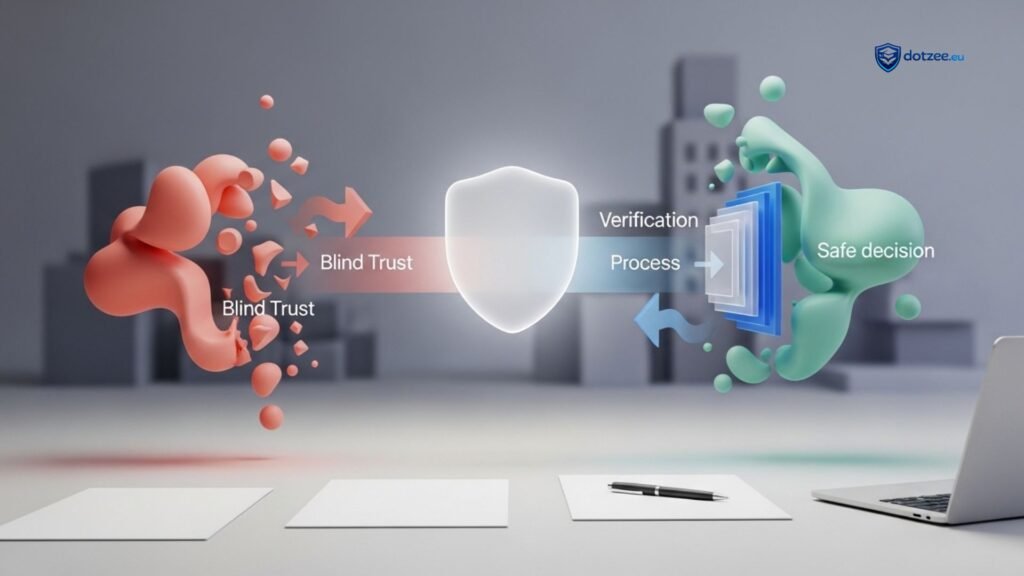
This is a practical point that very few people understand.
Many host organizations or NGOs provide some cover on their own, but that cover is usually limited. Some policies are only to protect the organization’s liability, some provide basic accident cover, and some are maintained only to meet internal rules.
Host Cover vs. Personal Cover: What’s the Difference?
Many students assume that if the host organization is providing insurance, they don’t need to get their own policy. But the reality is different! Let’s understand the key differences between the two:
Host Organization Insurance
🔸 Organization Protection – This insurance is primarily intended to protect the host organization from legal and financial losses, not you.
🔸 Limited Scope – Its coverage is often very limited, such as only for accidents that occur on the organization’s premises, or only for certain hours.
🔸 Not every volunteer activity is covered – If your work is something like hiking, construction, or fieldwork, the host insurance may exclude it.
🔸 Evacuation or Repatriation Vulnerable – Helicopter rescue, medical evacuation, or repatriation costs are often not covered in the event of an emergency.
👤 Your personal student volunteer insurance
✅ Your personal medical risks are covered – Illness, injury, hospital expenses, medication – all covered.
✅ Travel and activity specific – You can design your policy according to your trip dates, country, and nature of work.
✅ Your rights in the claims process are strengthened – Being a personal policy means you can contact the insurer directly, and the claims process is more transparent.
✅ Backup in case of insufficient host cover – If the host’s insurance doesn’t work for some reason, your own policy doesn’t leave you alone.
💡 The simple truth:
Host insurance is a good thing, but never consider it a replacement for your own personal policy.
If you are asked for proof of insurance before joining, make sure your policy:
- Cover volunteer work
- Is suitable for high-risk activities
- Includes emergency medical assistance and evacuation
- Is valid for at least that specific European country
🛡️ Remember: the responsibility for your safety ultimately lies with you. A proper personal insurance not only protects you, but also gives your family peace of mind.ining a program, check the policy wording along with the certificate. Just a glossy PDF is not enough.
🔍 Check these 7 things before buying a policy
This is where experience really comes in. At dotzee.eu, we often see that the problem is not in buying the policy, but in understanding the policy.
1) Tell the insurer your exact volunteering role 🗣️
If you:
- are lifting
- using tools
- handling animals
- going into mountains or forests
- working near vehicles
don’t hide it. Truth-based disclosure is the foundation of claim protection.
2) Check the country list 🌍
“Europe” is not the same for every insurer. Some policies include some countries, some exclude some, and some divide the definition of Europe into different categories.
So don’t buy just by looking at “Europe cover”. Read the actual country list.
3) Keep the policy wording above the marketing brochure 📑
A brochure is always beautiful. The real game is in the wording. See:
- Is manual labor included or not
- Is adventure activities included or not
- Is volunteer work explicitly mentioned or not
- What are the exclusions
- What claim documents are required
4) Understand excess or deductible 💰
Excess is the amount you may have to pay out of pocket at the time of claim. The excess can be very high in a cheap policy. So don’t be happy with a low premium.
5) Is 24/7 assistance really available or just in name? 📞
Some companies list a 24/7 hotline, but the response is weak. It is better to also check the insurer’s language support, response time, and emergency coordination.
6) Disclose pre-existing medical conditions 🩺
If a condition is already present, it can be very expensive to hide it later. Some policies provide limited cover, some require special endorsement, and some exclude it altogether.
7) Get written confirmation ✍️
If the insurer or broker tells you something over the phone, confirm it in an email. Verbal assurance is not enough for high-risk volunteering.
📘 Three real-world examples that make policy choices easier
I believe in practical scenarios more than theory, because the real test of insurance is not in the paper, but in the event of an accident.
Example 1: Mountain trail restoration 🏔️
A student group is working on a trail restoration project near the Alps. A volunteer twists his ankle and can’t even walk properly.
What was needed here?
- Medical treatment
- Ambulance or mountain rescue
- Possible evacuation
- Follow-up care
- Activity cover for outdoor/manual work
If the policy didn’t cover mountain work or physical conservation tasks, the claim could have been difficult.
Example 2: Animal rescue or shelter work 🐕
A student is working with animals at a shelter. A dog bite or scratch turns into an infection.
What is the important cover here?
- medical treatment
- infection-related treatment
- liability if bitten due to work conditions
- accidental injury coverage
This example is important because many people consider animal work to be normal charity work, even though the risk is significant.
Common mistakes of students going from Pakistan
This section is probably the most practical, especially for those who are going to Europe for the first time.
1) Buy the cheapest policy 💸
A cheap policy is not always wrong, but in high-risk volunteering, being cheap is often a sign of thin cover.
2) Not disclosing volunteering 🤐
If you write “tourism” on the form and are actually doing manual volunteer work, the risk of your claim being rejected increases.
3) Only reading the certificate 📜
The certificate has a nice summary, but the exclusions are hidden in the policy wording.
4) Ignoring the country list 🗺️
Europe is a broad term. Country-specific approval is essential.
5) Underestimating evacuation 🚑
In remote areas, the real cost is not treatment, but transportation.
6) Relying one hundred percent on the host organization 🏢
NGO cover helps, but a personal policy may still be necessary.
7) Not handling receipts and incident reports 🧾
Proof is very important at the time of claim. Save hospital bills, doctor notes, police report, injury report, and host incident form.
💰 What factors affect the cost of the policy?
If you are budgeting, it is important to understand why the premium increases.
1) Destination country
In some countries, medical care is expensive, so the premium increases.
2) Duration
The longer the stay, the higher the risk and the higher the cost.
3) Age
The premium also changes with changing age band.
4) Activity class
There is a difference between light volunteering and high-risk manual volunteering.
5) Coverage limits
A high medical limit, a high liability limit, and a high evacuation limit increase the premium.
6) Deductible
If you keep the excess high, the premium may be lower, but the out-of-pocket cost at the time of claim will increase.
7) Pre-existing conditions
If the policy provides condition-based cover, the cost may vary.
In my opinion, students should not cut medical and evacuation cover to reduce the premium. It is better to remove unnecessary extras, but keep the core protection strong.
🧠 What is the real understanding from our perspective at dotzee.eu?
Working in the insurance niche, one thing has come up time and again: people don’t buy policies, they buy reassurance. The problem arises when the reassurance turns out to be false.
That’s why my focus at dotzee.eu has always been to not just give the reader a definition, but to ask the questions that matter at claim time:
- Is the activity covered?
- Is the destination covered?
- Is medical evacuation included?
- Is liability cover sufficient?
- Does the policy wording really support volunteer work?
This mindset is essential for students doing high-risk volunteering in Europe. The purpose of your insurance is not just to meet the requirement, but to come in handy in situations when things don’t go according to plan.
🎯 Conclusion: Student Volunteer Insurance in Europe is a Smart Decision, Not an Option

If you are going to volunteer in a high-risk environment in Europe, insurance should never be taken for granted. Normal travel cover is often not enough, and even the limited insurance of the host organization will not provide you with complete protection.
The best policy for you is one that:
✅ Explicitly covers volunteer work
✅ Provides emergency evacuation with medical treatment
✅ Includes personal liability
✅ Does not exclude manual or physical work
✅ Is country-specific
✅ The claims process is clear, easy and transparent
🔹 In my opinion, the smartest step is to fully disclose your true role, country, dates, and work conditions to the insurer before purchasing a policy. Hiding anything may save you in the immediate future, but it will definitely increase the risk of a claim being rejected in the future.surance not as a paper contract, but as real life protection.
❓ FAQ: Common questions about high-risk volunteering insurance in Europe
1) Does general travel insurance cover volunteer work?
Usually not, or it does have limited cover. In particular, manual, physical or high-risk volunteering must be declared separately.
2) Is an EHIC sufficient for volunteering in Europe?
No, the EHIC or public healthcare access is limited and does not replace private insurance, especially in the case of evacuation and liability.
3) What is the most important cover in student volunteer insurance?
Along with medical expenses, emergency evacuation and personal liability are the most important. In high-risk environments, these three are particularly important.
4) Is it necessary to take out your own policy if the NGO is providing its own insurance?
Often yes. NGO cover can be limited, so it is better to have your own personal volunteer insurance as a backup.
5) What is the most important document when buying a policy?
The policy wording is the most important, not the certificate. The certificate summarizes the wording, the actual rules.
6) Is pre-existing medical condition covered?
Sometimes it can be on a limited basis, but it depends on the insurer and the policy. Hiding a condition is never a good idea.
7) Is baggage and equipment cover necessary?
If you are carrying field work, tools, a laptop or essential gear, then yes, it can be quite useful.
Disclaimer: This article is for informational purposes only and does not constitute legal or insurance advice. Always verify requirements.



Pingback: Student Insurance for Belarusian Students in Lithuania