
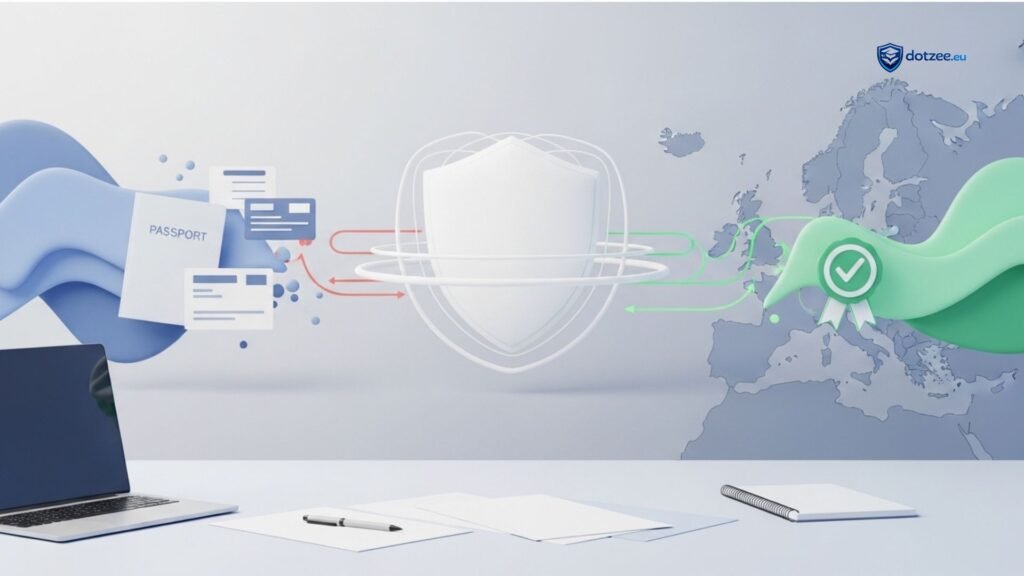

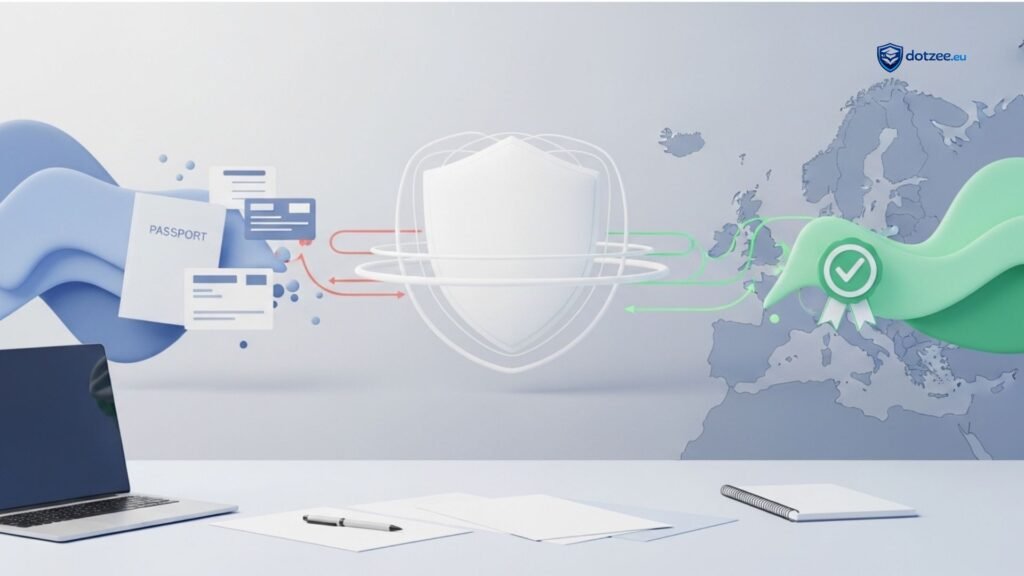
If you are from Ukraine and intend to study abroad, one thing that many students put off until the last minute is student visa insurance. Working on my own insurance website dotzee.eu, I have repeatedly seen that many students focus on university admission, visa appointment, accommodation and tickets, but consider insurance to be just “a mandatory piece of paper”. The reality is the opposite.
Student visa insurance is not just an embassy requirement, but is a fundamental part of your financial, medical and sometimes legal protection. Especially for students from Ukraine, given the current European and international travel and education situation, choosing the right insurance has become more important than ever.
In this article, I will tell you from the perspective of an experienced insurance website owner what student visa insurance should be, what things to check, what mistakes are most common, and how to choose a cover that will really work for you — not just put in the visa file.
📌 What is student visa insurance and why is it important for students from Ukraine?
Student visa insurance is an insurance policy that protects students studying abroad against medical expenses, emergencies, sometimes accidents, hospitalization, emergency evacuation, and in some cases personal liability or repatriation.
Its importance for students from Ukraine increases for a few reasons:
✅ Visa compliance – Many countries such as Germany, Poland, the Czech Republic, Spain, Italy, France and other European countries require specific insurance cover for student visas. Just a policy in name is not enough. Some embassies explicitly require a minimum cover amount, hospitalization, emergency medical treatment and repatriation.
✅ Unexpected medical expenses – If you are going to study in Europe or any other country, even a simple doctor’s visit can be expensive in many places. In an emergency, the costs increase even more. I have seen cases where students took out a “cheap policy”, only to find out later that outpatient treatment was not included or the deductible was so high that the benefit was reduced.
✅ Travel and residence uncertainty – Relocation, documentation and cross-border mobility issues have become more sensitive for Ukrainian citizens in the past few years. In such situations, a strong insurance plan provides both peace of mind and practical support.
🌍 Is the same type of insurance sufficient for every country?
Short answer: No.
This is the most important thing I always explain to my readers. Many students search on Google:
“best student visa insurance for Ukrainian students”
and then buy the first cheap policy they see. The problem is that each country has different requirements.
For example:
- A Schengen visa often requires at least 30,000 euros of medical cover
- Some countries treat travel insurance and long-stay health insurance separately
- Some universities list their approved insurance providers
- Some countries require registration with the local health system upon arrival
That is, a policy that is valid for a short-stay visa in one country may not necessarily be accepted for a long-term student residence permit.
✅ What should be included in a student visa insurance for students from Ukraine?
First of all, be sure to check the emergency medical cover, which includes hospitalization, urgent treatment, doctor’s consultation, surgery if necessary, and prescription drugs.
Along with this, repatriation and medical evacuation cover are very important, because in the event of a serious illness or accident, the costs of returning or transferring the body can be very high.
Accidental injury cover should also be mandatory, because minor accidents are common while traveling, cycling, doing part-time jobs, or playing sports in a new country.
It is very useful if the policy also includes third-party liability cover, so that financial responsibility can be avoided in case of accidental damage to someone’s life or property.
Nowadays, it is common to suffer from stress and anxiety due to a new language, academic pressure and being away from home, so it is a great asset if the policy includes mental health and counselling support.
Most importantly, if you have a pre-existing illness or chronic condition, read the policy terms carefully to see if it is completely excluded, limited cover is being given, or if a waiting period applies, as misunderstandings in this matter can be the most costly.
In short, choose a policy by understanding each clause in detail, not just for the paperwork, but for the actual protection.
⚠️ Why can only a cheap policy be dangerous?

In insurance, “cheap” is often not “best value”. My practical observation is that students, especially due to budget pressure, look for the lowest premium, but miss out on the following:
- High deductible – The policy seems cheap, but you have to pay the initial amount yourself at the time of claim.
- Limited network – Some insurers only work with a limited number of clinics or hospitals. If you go outside this network, reimbursement may be a problem.
- Long list of exclusions – Sports injuries, dental emergencies, mental health, pregnancy-related care, pre-existing conditions — all of these are often excluded.
- Visa-approved but not student-friendly – Some policies are technically sufficient for the embassy, but do not meet the daily needs of the student.
In my opinion, students coming from Ukraine in particular should take a policy that provides both visa compliance + real medical usability.
📄 What documents may be required when applying for student visa insurance?
You may typically be asked for the following information or documents:
- Passport
- Residential address
- University admission letter or enrollment proof
- Visa category or destination country details
- Travel dates
- Duration of stay
- In some cases, medical declaration
If you are temporarily present in another country than Ukraine and are applying from there, the documentation requirements may be slightly different. Therefore, it is important to align the requirements of both the insurer and the embassy.
How might insurance in Europe be different for Ukrainian students?
This is a practical question that is rarely discussed.
Some Ukrainian students:
- Are not applying directly from Ukraine
- Are in another European country with temporary protection status
- Want to convert status or relocate to a new country for study purposes
In such cases, standard travel insurance is not always sufficient. The insurer can see:
- Where is the applicant’s current residence
- What is the departure country
- What is the policy issuance jurisdiction
- Where will the coverage start
These are technical points, but they can affect both the claim and visa acceptance. Working in the insurance niche at dotzee.eu, I have learned that cross-border student insurance should not always be considered “simple travel cover”.
🧭 How to choose a good student visa insurance plan?
1. Check the country’s official requirements first
Don’t just rely on what an agent or Facebook group says. Check the embassy, consulate or official immigration guidance.
2. Understand the university’s insurance policy
Some universities require local insurance upon arrival, while temporary cover is required separately for the visa.
3. Look beyond the coverage amount to see the benefits
Check these:
- inpatient
- outpatient
- emergency
- specialist visits
- emergency dental
- prescriptions
- mental health
- evacuation
- repatriation
4. Be sure to read the exclusions
This is where the real truth is written.
5. Look at the claim process
A good policy is one that has:
- 24/7 assistance
- English support
- Digital claim submission
- Reimbursement rules are clear
6. Keep the policy wording safe
Just a certificate is not enough. Keep the full policy terms in PDF.
📖 Let’s understand with a real example:
Suppose a student from Ukraine is going to Poland for her masters. She took a low-cost student insurance online, because the embassy requirement was being met. After going there, she got a severe flu, then a chest infection, and had to go to a private clinic. At the time of claim, it was found that:
- outpatient consultation was limited
- coverage for medicines was very low
- first, there was an issue for taking treatment without approval
- refund was low due to deductible
Now on the other hand, a relatively balanced policy had a slightly higher premium, but:
- there was GP visit cover
- emergency diagnostics were included
- telemedicine was also available
- reimbursement process was easy
This is the difference between paper insurance and disposable insurance.
🏥 Is it possible to also take out local health insurance after arrival?
In many countries, the answer is yes
Student visa insurance often works in two stages:
Stage 1: For the visa – Pre-departure insurance to satisfy the embassy
Stage 2: After arrival – Local student/public/private health insurance enrollment
For example, in some countries you may:
- have to join a public health insurance scheme
- have to take out a university-approved private insurer
- have to provide proof of continuous insurance for residence permit renewals
That’s why I always say: don’t treat the first policy you buy as a last resort.
❌ Common mistakes for students from Ukraine
- Looking only at embassy acceptance
- Not looking at usable benefits
- Incorrect start date – If your travel is delayed or coverage starts after the arrival date, a gap can form
- Hiding medical history – Increases the risk of claim rejection
- Forgetting policy renewal – Coverage gap can be a serious problem in long-term studies
- Ignoring sports or part-time work – If you do cycling, gym, amateur sports or a student job, be sure to check related exclusions
📈 Current trends closest to 2026: What’s changing in student insurance?

Given the latest trends, student insurance has become more nuanced than before. A few things stand out in particThe most notable change is “digital-first claims,” where most insurance companies now allow claims to be submitted and documents uploaded through an app, making the process much faster and easier.
The trend of telemedicine is also growing rapidly, with online doctor consultations proving to be a very useful feature, especially for international students, as it is a great relief to get immediate medical guidance in a new country.
In terms of mental health, some insurers are now also adding counseling or mental health sessions as an add-on, which is of particular importance for students from Ukraine.
There is also flexibility in terms of policy duration, such as semester-based, one-year, renewable or multi-country plans that cater to the different needs of students.
On the other hand, embassies and immigration systems are now paying more attention to the nuances of policy documents and wording, so it is important to choose the right policy according to compliance rather than just taking the cheapest plan.
You can also visit the official European Union website for information on accommodation, travel rules and health within the European Union, as insurance should be considered part of the larger ecosystem of student mobility rather than just a separate piece of paperwork.
In short, it is time for students to look at insurance not just for visas, but as a smart, digital and comprehensive protection. ✅
💡 My practical opinion from the point of view of dotzee.eu
I, having worked in the insurance niche for a long time, can say with confidence that student visa insurance for students from Ukraine should not be seen as just a low-cost document. Especially when you are moving to a new country, with a new health system, a new language and possible financial limits, the real quality of the policy comes out at the time of claim.
My focus at dotzee.eu has always been to provide the reader with information that is practical, not just surface-level. The biggest problem in this topic is misinformation. People think that “visa approved” means “best insured”. However, the reality is that the real value of the insurance is tested only after the visa is approved.
If you are from Ukraine and are going abroad to study, here is my honest advice:
- Take a plan one step above the minimum requirement
- Don’t buy a policy without reading the wording
- Disclose any pre-existing conditions
- Test the claim helpline
- Cross-check the requirements of both the university and the embassy
These small steps can save you thousands of euros and a lot of hassle later on.
🎯 Conclusion
Student visa insurance for students from Ukraine is a technical, but extremely important topic. It is not just part of the visa file, but the safety net of your entire educational journey. The right insurance can protect you from unexpected medical costs, emergency situations, documentation issues, and cross-border uncertainty to a great extent.
In my opinion, the most sensible approach is to think of insurance as a “risk protection tool” rather than an “expense.” Especially for Ukrainian students, who often pursue education with complex mobility situations, status changes, or multi-country movement, choosing the right policy is not just a formal requirement but a practical necessity.
If you compare wisely, verify official requirements, and read the wording before making a decision, you can choose a policy that will truly protect you, not just the embassy.
❓ Frequently Asked Questions (FAQ)
Is student visa insurance mandatory for students from Ukraine?
Yes, in most countries some form of insurance is required for a student visa.
Is Schengen travel insurance sufficient for a student visa?
No. Not always. It may be sufficient for a short stay, but separate insurance may be required for a long-term study visa or residence permit.
Is pre-existing illness covered by insurance?
Often not fully, or with limited conditions. Be sure to check the policy terms.
Do I have to take out new local insurance after arrival?
Yes, in many countries, local public or private health insurance enrollment is required after the visa.
Is it okay to take out a cheap policy?
Only if its benefits are truly adequate. Buying just because of a cheap premium can be risky.
What is the most important thing when making a claim?
It is very important to follow the policy wording, receipts, medical reports and the insurer’s pre-approval conditions.
Do students who work part-time need separate insurance?
This depends on the country and the policy. Some policies do not fully cover student work-related risks.
Disclaimer: This article is for informational purposes only and does not constitute legal or insurance advice. Always verify requirements.



Pingback: Health Insurance for Students in Bremen: Public or Private? A Complete Guide
Pingback: Insurance for African Students Studying in Europe